Haruki Murakami’s Norwegian Wood is, for Marta Ibarrondo, a reflection on the weight of chronic depression: that feeling of being shut down even when everything around is alive, like being dead in the middle of spring.
She works on Japanese Chiyogami paper, screen printed by hand, a base that holds light, innocence and exuberance, and covers words from the novel with twelve thick, crude layers of black acrylic. It builds up like tar. Heavy and suffocating. This is how depression is translated into material. She leaves dust and debris on the surface as well. When one is in that state, there is a sense of neglect, of things simply accumulating over time.
And yet the Chiyogami is still there. Only the thinnest slivers of words remain visible, fine bright lines running through the black like the golden seams of kintsugi, the Japanese art of mending broken ceramics with gold. Nothing has been erased, only buried. Even in the darkest moments, joy does not disappear. It waits, and it finds its way through the cracks. For Ibarrondo, resilience is not escaping the dark but discovering that the light was never gone, and that the fractures are exactly where it shines.

Spring, 2026
Acrylic on hand-screened Japanese Chiyogami paper
39 X 26 in (99.06 × 66.04 cm)
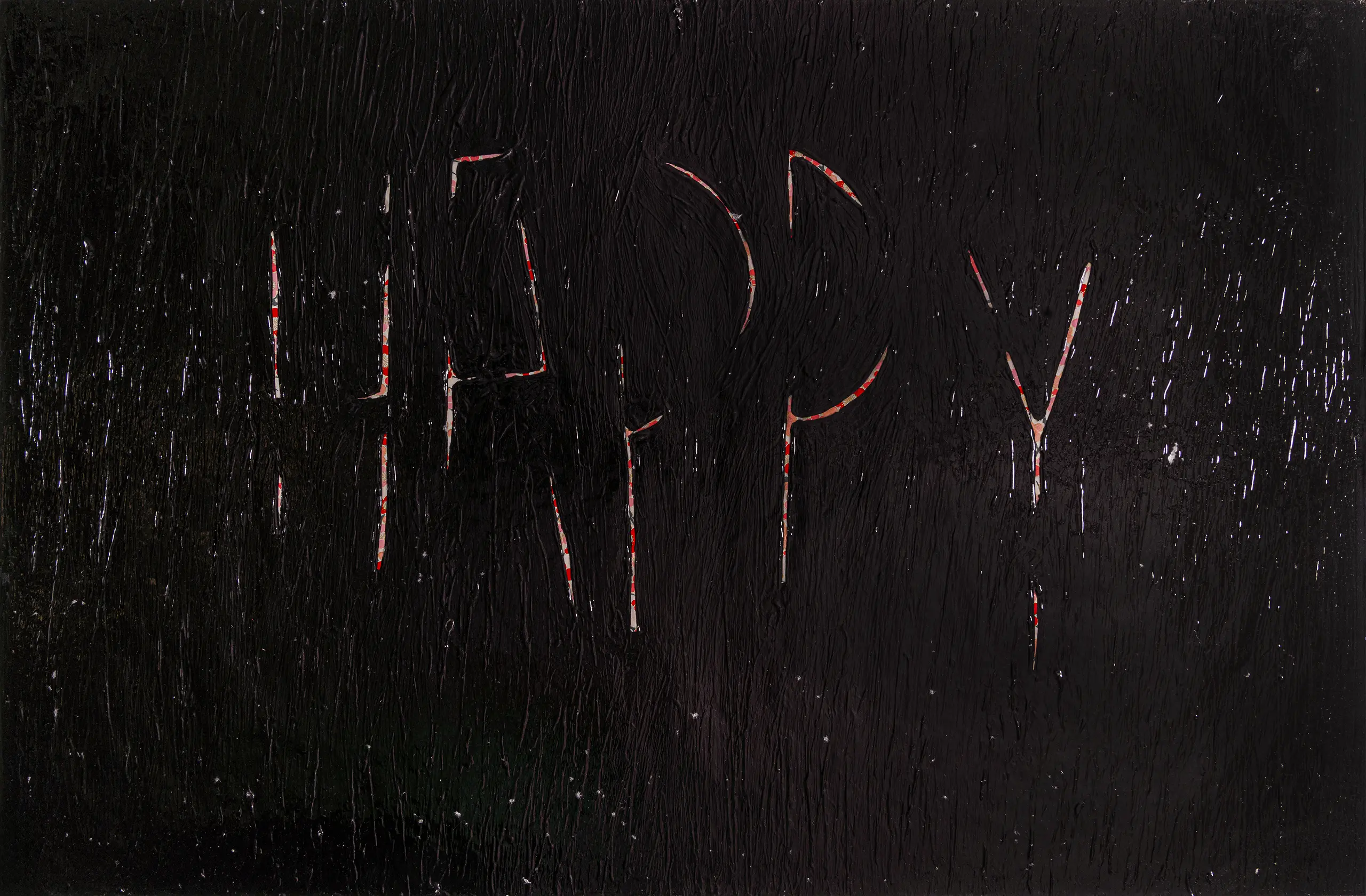
Happy, 2026
Acrylic on hand-screened Japanese Chiyogami paper
39 X 26 in (99.06 × 66.04 cm)

The Long Night, 2026
Acrylic on hand-screened Japanese Chiyogami paper
39 X 26 in (99.06 × 66.04 cm)
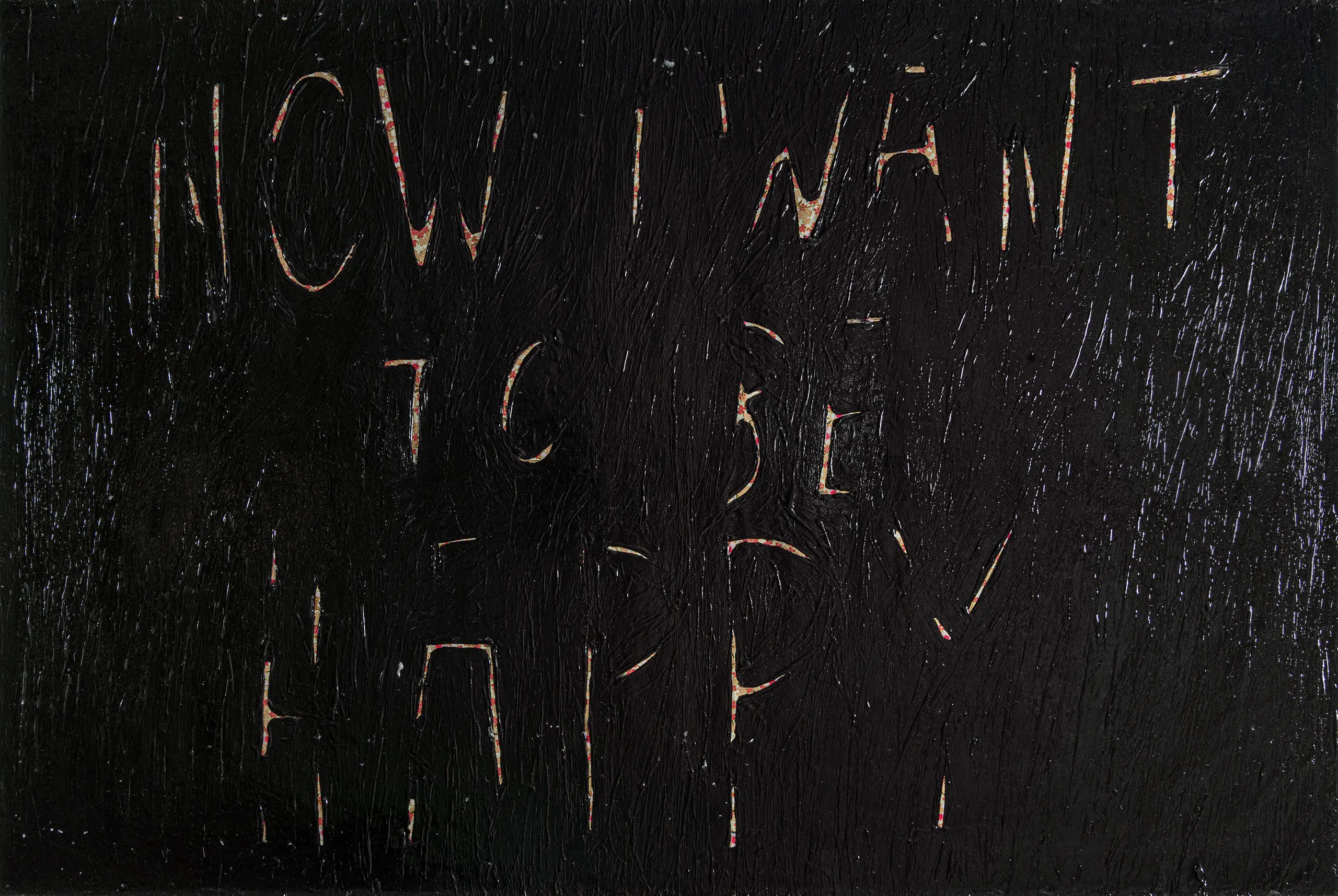
Now, 2026
Acrylic on hand-screened Japanese Chiyogami paper
39 X 26 in (99.06 × 66.04 cm)

Consumed, 2026
Acrylic on hand-screened Japanese Chiyogami paper
39 X 26 in (99.06 × 66.04 cm)
